Adventures in HF: Part 1
DIYTechnologyWaste more money and time - but in space!
While I’ve had my amateur radio license for well over 10 years, I’ve stuck mostly to very high (VHF) and ultra high frequency (UHF) operations - typical repeaters, local clubs, and emergency services. Think about the guy with a weird number of antennas on his 2nd gen 4Runner or the actual heroes running emergency communications silently in the background during a wildfire. VHF/UHF are awesome, thrive due to tons of local investment in infrastructure, and still let you get out 20+ miles depending on terrain (and potentially worldwide with internet operations). These bands are very popular with emergency planners, preppers, and hobbyists, and the equipment to use them is readily available, often very cheap, and usually very forgiving. Clubs exist in even small towns, and these clubs usually maintain repeaters to…repeat signals across longer distances. You can get a license, buy a cheap Baofeng, and get on the air with 5W of power instantly. These bands are broadly line of sight - if you can see it, you can contact it.
HF is the same but different. While the same core principles apply - including the same local clubs - the equipment, investment, and norms all change. If VHF/UHF are local, HF is global - it’s used by operators in every country and region you can list, and remains absurdly popular and active to this day. HF isn’t line of sight - it’s angle of refraction - meaning the signals actually refract off of the atmosphere (in most cases), spanning the globe, scattering, and landing with random operators. This is the land of interstate, intercountry, and intercontinental communications, and it’s busy.
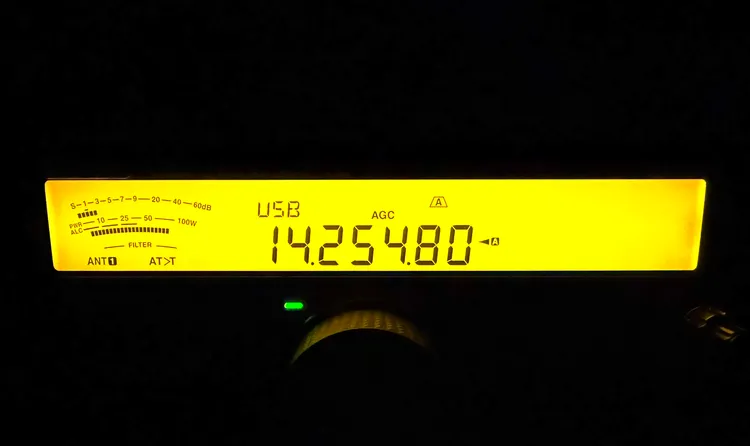
I’ve always wanted to get into HF. I accidentally bought a really solid HF radio a few years back - a Kenwood TS-590S - at a swap meet. I was cocky and refused to admit that I didn’t have any of the gear for it, and it gathered dust for years. After a move, I decided it was finally time to figure out HF, and I cannot say more positive things about it.
The physics here will feel like magic. It’s easy to understand how radio works - throw signal into sky, signal hops off of atmosphere (or more exotic things happen), signal happens to reach someone listening to that frequency, boom - contact. But in an everyday sense, it will feel absurd that you can throw 100W of power into space (about the power of an old incandescent lightbulb) and clearly and easily talk to a dude with too much free time/money in Poland as if they were in your room. And then 5 minutes later the sky gets angry and you hear nothing. Nothing about HF feels tangible, but yet it’s active all around you constantly. Likewise, I know putting in 2 times the power doesn’t equal 2 times the signal strength because the relationship is logarithmic, but it still feels strange and bizarre that I can’t simply buy a 200W radio to double the chances someone can hear me. This is the zone where “this was on my test and I took physics” slams into “what the hell” fast.
Beyond the magic, HF is just alive. Thousands of radio operators across the world are on the air constantly to connect, chat, run “nets” (scheduled chat groups), and compete to see who can get the most/hardest/weirdest contacts. Different bands have different feels, and some become daily drivers while others open up at random and unlock whole continents for 20 minutes. This is no slight to VHF/UHF, but it’s a numbers game - HF just brings a worldwide audience to your shack any time you want. VHF/UHF also feels alive at times with over-the-internet radio and local nets, but HF is at that level of intensity on every band and every frequency at every hour. Until a solar storm kills propagation for a whole continent.
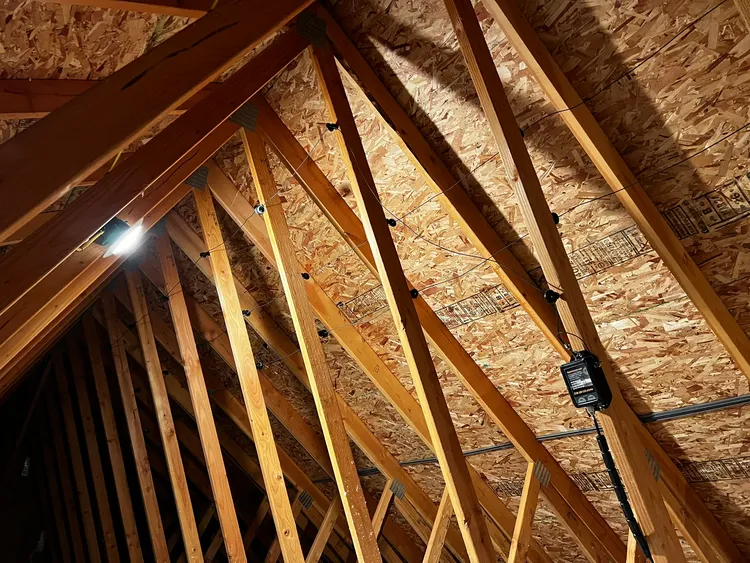
Getting on the air took a lot more thought than VHF/UHF require. Antennas are everything, and I have an HOA that specifically does not permit outside antennas. Most people online will immediately tell you that an outdoors antenna is king, but remember that people are on the air right now in apartments, attics, and summits. Turning to the attic was my option, where you can use a range of antenna shapes to get pretty good HF working. I chose the End Fed Half Wave (EFHW) antenna to give me more band coverage, as I have a large attic to use. I’ll cover how I did just that in a later post, but it was easy, deeply frustrating, and immediately rewarding.
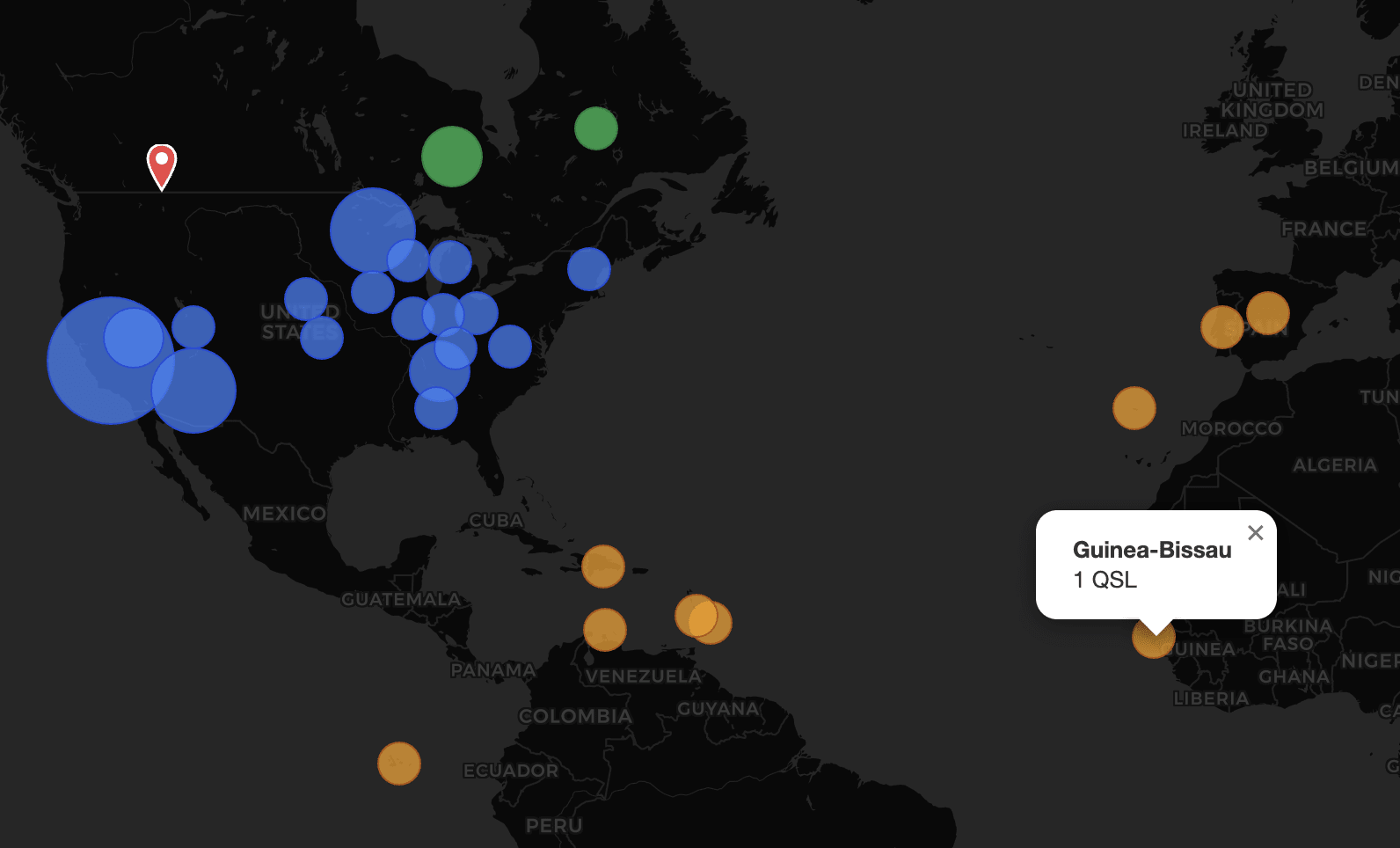
In the first 2 months, and across 2 serious contests and mostly just casual attempts at night, I’ve logged a confirmed 50+ contacts (called QSLs, where both me and the other person logged the contact) and well over 150 to be confirmed contacts (QSOs). This setup is working hard to land me dozens of US states, several countries across South America, Africa, and Europe, and even super niche and hard to hit confirmed contacts with places like Asiatic Russia, Galapagos Islands, and Guinea-Bissau. I’ve had long chats with random blokes in Australia, and practiced my rusty Russian with an operator in Kazakhstan. While some of this is a bit on the side of cheating (a crew flies out to Galapagos periodically to give people the chance to log this exotic contact), I’m reaching these contacts while outcompeting much larger stations and they can hear me clearly enough. It’s essentially like whispering in a stadium and having someone in nosebleeds nodding along.
There are limits, but you can live with all of them. One of mine is that I cannot hit Brazil from my position and with my setup. I can hear Brazilian stations constantly, but they cannot hear me over their noise yet, even with prime conditions. Swap to a vertical mast, and I’m reaching Brazil more often than not. Some days, the bands are unusable - so noisy and loud that even the normal strong stations can’t be heard. Due to my home’s construction, someone flushing a toilet creates a deafening roar of RF on every band. But navigating these limits of my unique setup makes me a better operator. If it were easy, and I just ran a 1.5kW station in an open field on top of a mountain, HF would feel simple. Instead, the challenges turn this into a frustrating, time wasting, deeply satisfying hobby. Better, these same skills - hearing weak signals, plucking signal from noise, and tinkering with antenna layout - translate well later on to harder challenges in HF like low power QRP operations (try reaching Russia with 4 watts), SOTA/POTA (head to a national park and string up a makeshift shack), and digital or non-voice modes like CW (Morse code). Real nerd shit.
Seeing is better than telling - I’m excited to share a new, live view of my contacts built right into my website! This includes a view of the states, provinces, and countries I’ve reached, my most distant contacts, and notable contacts. These feed from Logbook of the World (another can of worms for later) and update live as contacts confirm. The whole thing is here, but this is the live map:
If you want to get started with all of this, it honestly will seem harder than it is. Get your license, get a good radio, stay simple and humble, and learn as you go. While VHF/UHF are very open with the entry level Technician license, HF is far less open. You’ll need a General license to use most of the bands, and an Extra to use the full range open to amateurs. Most operators I’ve run into, though, are Generals - the vast majority of amateur frequencies are open to you, and you can do pretty much anything an Extra can. If you love technology, find yourself tinkering, like talking to random people, or just want to get eyes on a world you cannot normally see all around you, HF is your calling.
Next up, more posts on some of the more interesting aspects of HF - contests, QSL cards, and nets!